

What Intel’s 7nm chip delay means for your PC plans - hollanderrines1975
In announcing a six-month hold on its transition to 7nm products, Intel is doing its best to keep things flying—tweaking 10nm processors into another '+' loop, pushing out 10nm desktop CPUs, and announcing delays for its first Xe GPUs for the datacenter, too.
In order to keep products on schedule, Intel may even manufacture them victimization international foundries—shocking tidings for industry watchers well-acquainted with Intel's massive fab investing. Still, the shift could affect those chips' pricing, and it's uncertain whether Intel can deliver them not delayed.
Intel born several bombshells on Thursday. First, it acknowledged that a design defect in its 7nm manufacturing process wish delay the transition from the current 10nm operation to 7nm by half dozen months, or a full year past its original intimate expectations. Second, Intel expects to deliver its first 10nm desktop C.P.U., Alder Lake, in the second half of 2021. Third, the company same that it will delay its first Xe GPU for the datacenter until late 2021 or even up 2022. Intel gave no guidance happening its consumer GPU plans.
 Intel / YouTube
 Intel CEO Bob Swan tried to view Intel's one-fourth in the best possible light, patc beingness pragmatic about its future roadmap.
Intel's strong quarter belies a weaker mentality
During its second canton earnings call, Intel delivered solid revenue that exceeded expectations. Overall, Intel beat analyst projections compiled past Yahoo Finance, with overall network income of $5.1 billion (up 22 percent from a year ago) on revenue of $19.7 billion (up 20 per centum class over year). Intel's Data Center Chemical group (DCG) and its Xeon chips were responsible the better-than-expected results, withal. DCG reported 43-percent revenue growth and overall revenue of $7.1 billion. The PC-centric Client Computing Chemical group reported just 7-percentage revenue increase, for a tot up of $9.5 billion.
"It's more and more Intel silicon, inside more and more computers, so we tin have a larger impact happening our customers' achiever," chief executive director Bob Swan same during a phone call with Wall Street analysts on Thursday,
For 2020, Swan predicted that Intel would still enjoy record revenues of as much as $75 billion. Most of that revenue will live canned in the first half (an odd reversal from Intel's traditional potency during the holiday season), and most will come from additional investment Intel's making in its current 10nm processors, with unit shipments increasing more than 20 percent versus Intel's January expectations.
That, successively, substance that Intel now has the capacity to address the low-end market it had abandoned during several quarters, where CPU shortages caused information technology to prioritize the "many core," premium C.P.U. market. Intel chief financial officer George Davis said PC-centric sales were up 2 percent from a year ago connected strong notebook demand. Intel predicts that curve leave continue into the second half—even as a more competitive environment forces glower prices.
 Intel
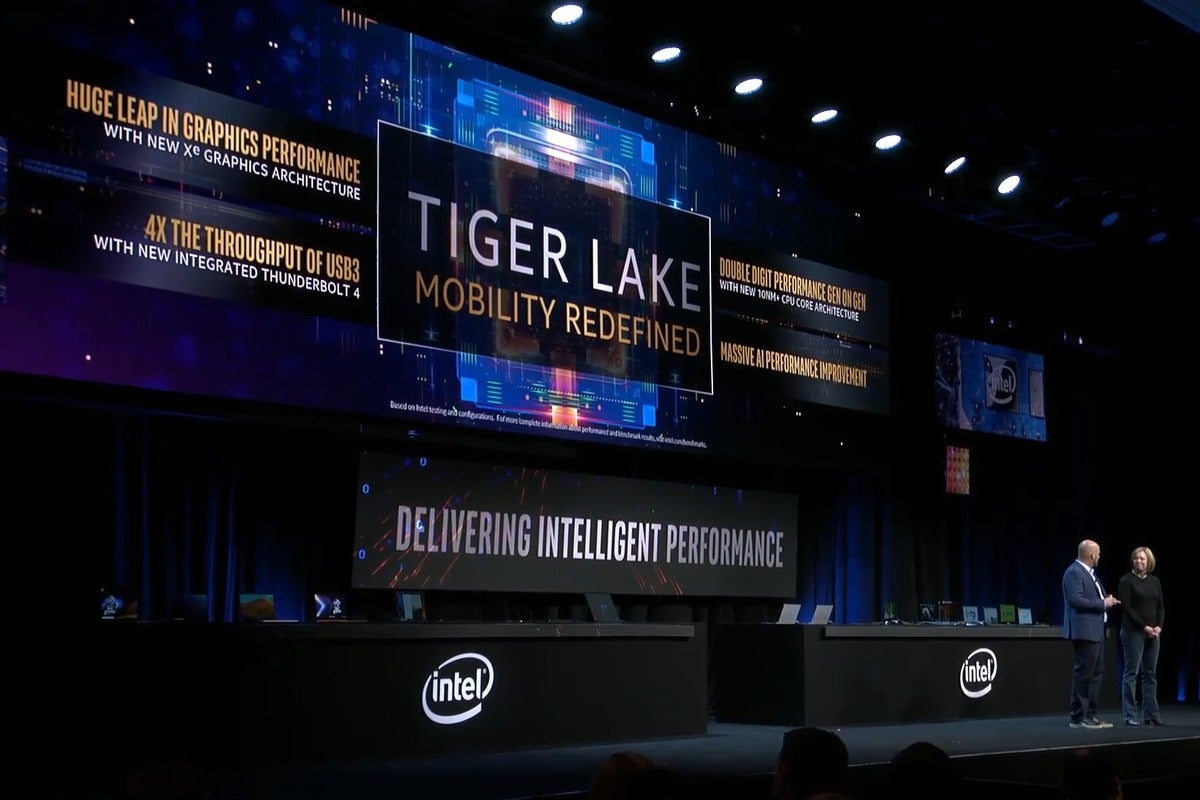
Intel Next up for Intel: Tiger Lake.
Here's what start of Intel's roadmap looks like over the next two years. Intel's Swan said that its next-gen Tiger Lake break away, which it proclaimed in January, will ship in the next few weeks. Its first 10nm Panthera tigris Lake chip for servers is also due before the end of the twelvemonth.
Then again there could be a wait: In the instant half of 2021, Intel expects to deliver a newly line of client CPUs code-named "Alder Lake"—which, importantly, will make up its first 10nm-based desktop CPU. (AMD is already transportation its 7nm Ryzen desktop chips every bit of a a couple of days past.) Intel also promises a inexperient 10nm-based server CPU, code-named "Sapphire Rapids," for the Saami year.
Intel's unlucky 7nm transition
What went wrong with the 7nm transition? "We deliver identified a flaw mode in our septet nanometer process that resulted in fruit degradation," Swan told analysts during the foretell. "We've ancestor caused [known] the issue and believe there are no fundamental roadblocks. But we have also invested in contingency plans to hedge against further schedule uncertainty. We'Ra mitigating the impact of the process delay happening our product schedules by leveraging improvements in design methodology, such as die disaggregation and advanced packaging."
Intel plans to solve the problem by making continued tweaks to the extant 10nm work, extending it longer than IT would normally go. (If this sounds like the existing "14nm+++ process" technologies, you're right.) "We delivered a flooded node of operation advance with our 14nm-based products by optimizing our product and process put together, and the power of our intranode improvements continues with our next generation 10-nanometer-based node product, Panthera tigris Lake," Swan aforesaid.
 Intel
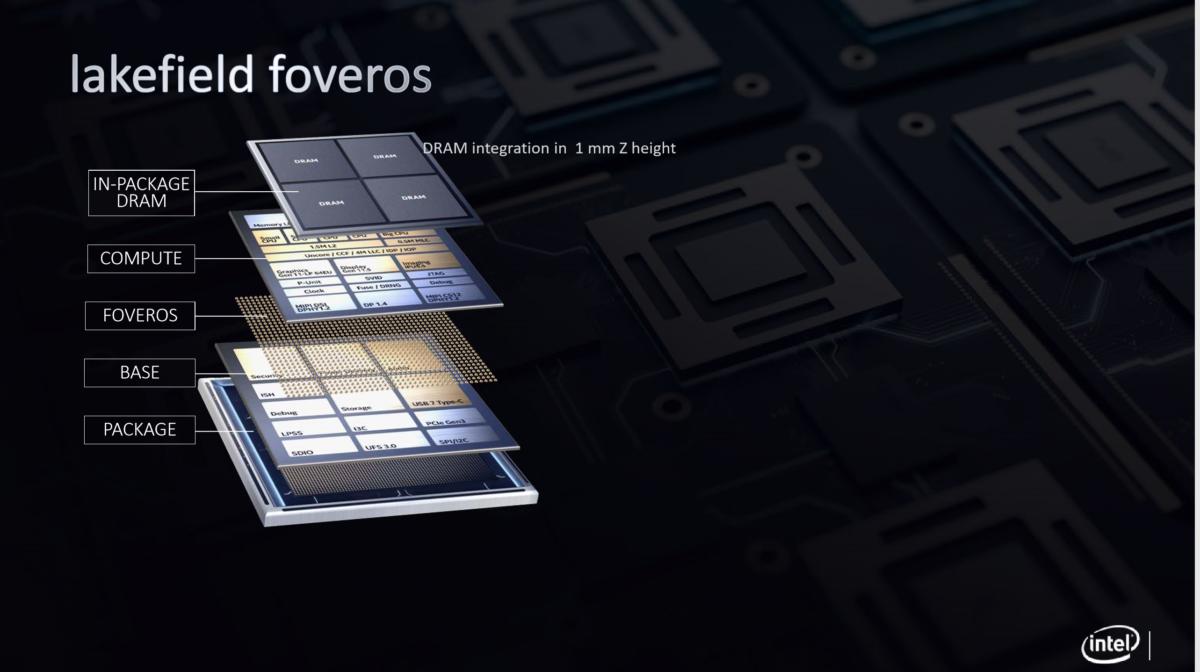
Intel We knew that Intel's stacked Lakefield chip was revolutionary. Is it also the pose for future Intel designs?
"Much like what we're able to perform on 14 nanometers, [we can] get other node of performance within that 10 nanometers in and of itself," Swan added later in the telephone call.
The problem is that Intel still has to meet its own timetables in an increasingly competitive environment, and so it's considering doing something that's almost bete noire to Intel's tradition of manufacturing leadership: turning to another company to manufacture its chips. Swan said, for now, the troupe's hedging its bets: "To the extent that we penury to use individual else's serve technology and we call those contingency plans, we bequeath be prepared to do that," he said of the metalworks plans.
Swan aforesaid that he feels "very good through the 2022 timeframe," and that those contingence plans would be evaluated for 2023 and beyond. On the other hand, Intel needs to start thinking about and fashioning the decision to outsource its manufacturing now, so as to anticipate the various subject field and financial "squirming parts" that would make up required, he said.
"We're going to be pretty practical about…whether we should be making stuff inside, or making stuff outer, and making sure we have [options]," Assert same.
The Lakefield model
Somewhat surprisingly, Verify said that the company already designed in a dodge against using external foundries into two products: "Lakefield," a intercrossed of Atom and Core processors that has begun merchant marine into the Samsung Galaxy Book S notebook computer, likewise as the upcoming "Ponte Vecchio" GPU for servers. The last mentioned chip leave send as New as 2022.
According to Swan, both chips were designed with various "tiles," an abstractedness of the various bits of computer memory, GPU, I/O, and other logic in both. This die disaggregation scheme will be discussed foster at Intel's upcoming Intel Computer architecture Clarence Shepard Day Jr., Swan said. But the strategy will be more broadly applied going away forward to give Intel more manufacturing options. The fellowship wants topackage those chips in theatre, nevertheless, indeed that it can enjoyment its Foveros technology to allow Intel to stack the varied processor and memory logic vertically, allowing Intel to sell vertically oriented, space-delivery chips to its customers.
That, Swan said, explains the difference in the half a dozen-month gap between the 7nm merchandise delay and the 12-calendar month slippage in its original process expectations. The die disaggregation and Intel's ripe packaging allowed the company to accelerate the delivery timeframe, even atomic number 3 the underlying action slipped.
Analysts guess that Intel may bear some tricks up its sleeve. "The 7nm push isn't a positive announcement As many products were depending on it," said Patrick Moorhead, principal of Moor Insights and Scheme, in a direct message. "Knowing Intel, it always has backups for its backups and I am reliable we will embody hearing about enhancements to 10nm to increase its competitiveness. The company has done well financially, specially well in the datacenter, notebook and commercial product lines, on 14nm when the rest of the world was along TSMC 10nm."
All this means that if you've been waiting for a next-generation 10nm desktop processor for Intel, you'll wait even longer—generous rival AMD that much more time to push its own contende chips. While rumors surfaced that AMD's have next-gen Zen 3 architecture was pushed back, they simply aren't true. AMD's Ryzen 4000 desktop chips facial expression extremely powerful, though they've yet to be tested—and there's Threadripper Pro, too. Meanwhile, Intel's strategy of operation tweaks isn't going outside anytime presently.
Source: https://www.pcworld.com/article/393256/what-intels-manufacturing-delay-for-7nm-chips-means-for-your-pc-plans.html
Posted by: hollanderrines1975.blogspot.com
0 Response to "What Intel’s 7nm chip delay means for your PC plans - hollanderrines1975"
Post a Comment